
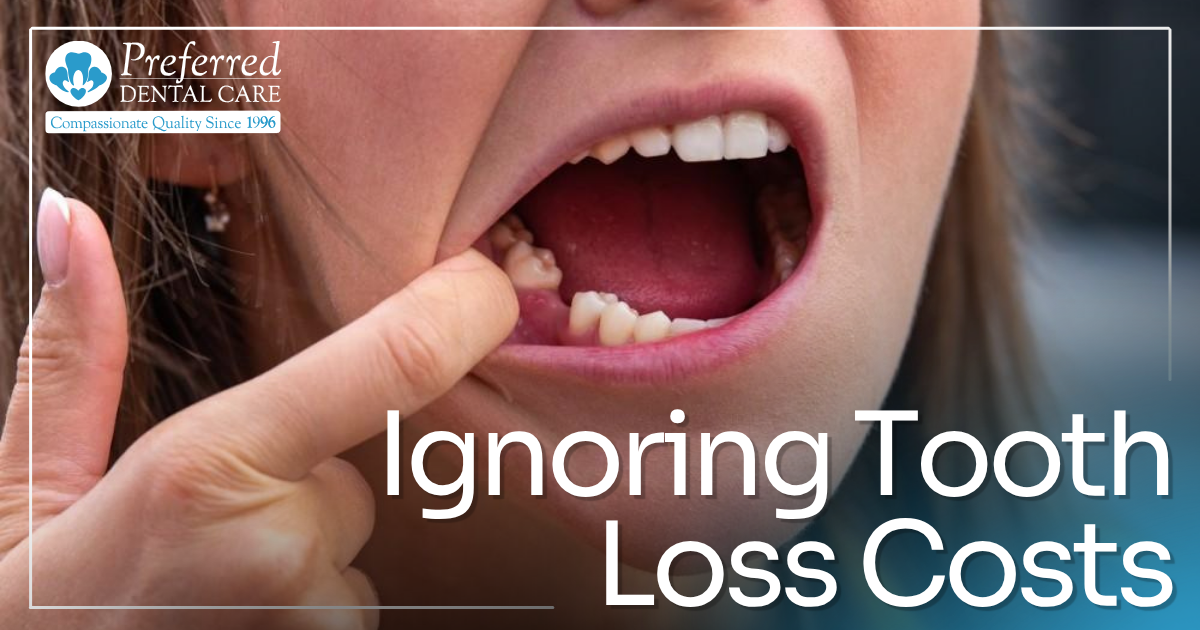
Dental Implants vs. Just Living With the Gap
Losing a tooth may not feel urgent, especially if the gap isn’t visible when you smile or doesn’t hurt. However, waiting can lead to bone loss, misalignment, and complications. For many, the main choice is between taking action and accepting these risks by doing nothing. That second option is more consequential than it seems, as delaying treatment can increase the risk of bone loss, misalignment, and future complications.
Doing Nothing Is Easy at First
People adapt quickly to the loss of a tooth. They start chewing on one side without thinking. They get used to how the space looks. What felt temporary starts to feel like a new normal. But during this period, teeth, bone, and gum tissue continue to change in response to a missing tooth.
What’s Happening Beneath the Surface
Every tooth plays a structural role. It supports the bite, disperses pressure, and holds neighboring teeth in position. When one is missing, the surrounding teeth begin to compensate, and that is rarely clean. Teeth near the gap may drift. The opposite tooth can shift without contact, and the jawbone in the area starts to deteriorate. These changes are gradual and do not reverse on their own.
The Bigger Picture
Pain isn’t always present. Bone loss, tooth movement, and bite changes can develop quietly and become more complex over time. Small signs are worth paying attention to: food catching in the gap, one side of the mouth getting more use than the other, or a bite that feels slightly off. These are early indicators of a pattern developing underneath the surface.
The Cost of Waiting
Choosing not to replace a missing tooth is risky. Over time, the gap changes the landscape around it, sometimes significantly. Left unaddressed, a missing tooth can lead to:
- Neighboring teeth shifting into the space and complicating future treatment
- Bone loss in the jaw where the root used to be
- Uneven chewing pressure on remaining teeth
- Bite changes that affect comfort and function
- Additional treatment steps before an implant can be placed
The longer a patient waits, the more complicated the path forward can become.
What a Dental Implant Restores
An implant doesn’t just fill a space. It replaces the root, stimulates the jawbone, supports surrounding structures, and restores comfort in daily life. Patients describe a major shift after treatment. They stop protecting the area. They stop adjusting how they chew. They stop thinking about it.
You don’t have to commit to treatment to have the conversation, but getting evaluated sooner rather than later can help you feel more confident and in control of your oral health, providing clarity while options are still straightforward. Schedule an appointment at our office located in Indianapolis, IN to learn more about replacing your missing tooth with a dental implant.